
SELECT * FROM category_ques_ans WHERE web_id = 50 AND section_wise_category_id = 336 and active = 0
Architectural Stair Services | Construction Business Review Europe
CLOSE
  • Outdoor Construction
  • Construction Consulting Europe
  • Mechanical Contractor Canada
  • Mould Remediation and Testing Europe
  • Swimming Pool Construction APAC
  • Building Sealing Solutions Europe
  • Kitchen and Bath
  • Decking Canada
  • MEP APAC
  • Construction Saudi Arabia
  • Construction Law APAC
  • Construction Coating Europe
  • Foundation Construction Canada
  • MEP Canada
  • Apartment and Condominium Contractors Canada
  • Cold Storage Construction APAC
  • Precast Concrete Europe
  • Construction Staffing Europe
  • Pre-Construction Services
  • Flooring System APAC
  • Scaffolding Canada
  • Swimming Pool Construction Canada
  • Residential Construction
  • Systems
  • Structures
  • Professional Services
  • Construction Forensic and Owners Representative Europe
  • Buinding Restoration and Maintenance Europe
  • Modular and Prefab Construction Europe
  • Construction Interiors Europe
  • Outdoor Construction Europe
  • Pre-Construction Services Europe
  • Building Restoration and Maintenance Canada
  • Construction Management Canada
  • Concrete Canada
  • Construction Cladding APAC
  • Concretes, Aggregates and Construction Materials APAC
  • Concretes, Aggregates and Materials Europe
  • Commercial Contractors Europe
  • Commercial Contractors APAC
  • Dummy
  • Flooring Systems Europe
  • Construction Management APAC
  • Landscaping Canada
  • Construction Engineering Services
  • Construction Bidding and Auctions
  • Mechanical Electrical and Plumbing
  • Roofing and Siding Systems Europe
  • Architectural Glass APAC
  • Startups APAC
  • Forensic and Owners Representative
  • Flooring System
  • Waterproofing APAC
  • Wall Systems
  • Safety and Compliance Europe
  • Architecture and Design Services
  • Modular and Prefab Construction
  • Architectural Glass
  • Construction MENA
  • Construction Demolition and Recycling Europe
  • Construction Interiors
  • Kitchen and Bath Europe
  • Steel Building APAC
  • HVAC
  • Doors and windows
  • Roofing and Siding Systems
  • Modular Construction Canada
  • Cold Storage Construction Canada
  • Insulation, Coating and Waterproofing
  • Building Information Modeling APAC
  • Architectural Glass Canada
  • Sustainable Construction APAC
  • Building Restoration and Maintenance
  • Commercial Contractors
  • Specialty Construction
  • Construction Engineering Canada
  • Construction Engineering MENA
  • Specialty Construction Europe
  • Modular Construction APAC
  • Construction Marketing
  • Construction Latam
  • Workforce Management and Staffing
  • Roofing Systems APAC
  • Construction Consulting
  • Steel Building Europe
  • Construction Demolition and Recycling APAC
  • Safety and Compliance APAC
  • Concretes, Aggregates and Materials
Skip to: Curated Story Group 1
Construction Business Review
US
EUROPE
APAC
CANADA
MENA
LATAM
AUSTRALIA

Advertise

with us

  • Europe
    • US
    • EUROPE
    • CANADA
    • AUSTRALIA
  • Home
  • Sections
    Building Sealing Solutions
    Buinding Restoration and Maintenance
    Commercial Contractors
    Concretes, Aggregates and Materials
    Construction Coating
    Construction Consulting
    Construction Demolition and Recycling
    Construction Forensic and Owners Representative
    Construction Interiors
    Construction Staffing
    Flooring Systems
    Kitchen and Bath
    Modular and Prefab Construction
    Mould Remediation and Testing
    Outdoor Construction
    Pre-Construction Services
    Precast Concrete
    Roofing and Siding Systems
    Safety and Compliance
    Specialty Construction
    Steel Building
  • Leadership Perspectives
  • Insights
  • News
  • Conferences
  • CXO Awards
  • About Us

Thank you for Subscribing to Construction Business Review Weekly Brief

Modular and Prefab Construction

Architectural Stair Services

Architectural stair services is a specialized construction and design segment focused on the planning, fabrication, and installation of stair systems. It integrates structural engineering, material craftsmanship, safety compliance, and aesthetic design to deliver functional, visually distinctive stair solutions that enhance circulation, accessibility, and architectural identity across residential, commercial, and institutional spaces.

Solutions
Synergi: Stairs That Shape Experience
Synergi
Synergi: Stairs That Shape Experience
Walter Bowie, Vice President, Client Relations
Stairs shape how people move through a space, how they pause, and what they notice. Whether they stand out or disappear into the architecture, they play a crucial role in how a space feels. However, making that kind of impact requires more than design intent. It takes a team that knows how to carry that vision from paper to reality without missing a step.

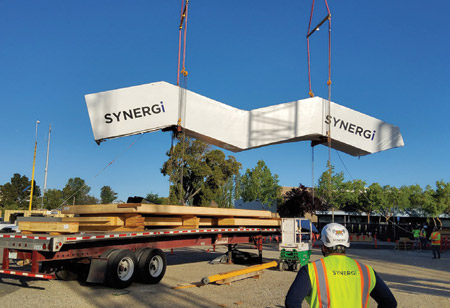
That is where Synergi comes in. While many others focus on metal fabrication or cover only a specific region, Synergi offers comprehensive stair solutions and serves clients nationwide.

“Our process covers everything. We design, engineer, fabricate, and install every stair element, whether it is glass, metal, wood, or structural steel,” says Walter Bowie, vice president, client relations.

That full-scope capability is essential, but what truly makes the most significant difference is Synergi’s timing. The team often gets involved early, before a design is finalized. As soon as a design concept or schematic begins to take shape, Synergi jumps into a collaborative format. This means sitting at the table with architects, engineers, contractors, and clients, working through every challenge together.

Weekly or biweekly meetings are the norm, and it is during these sessions that design intent merges with constructability and gets translated into engineered solutions. Input is gathered, drawings evolve, and the stair begins to take its true shape.

Tailored Solutions for Every Vision

Of course, no two clients come with the same needs. Some are racing against tight deadlines and need a stair delivered fast. Others want something visually striking but have to keep the budget in check. Then, there are those projects where the design team arrives fully committed to a concept they have already embraced. The materials have been chosen, the shape is admired, and the team is fully invested. Then, the engineering review begins and reveals that the structure needs to be bulkier or that the finish materials add too much weight. That is when Synergi’s experience becomes essential.
Read more
State of Industry

Precision and Expression: Trends in Architectural Stair Services

The architectural stair services industry blends aesthetics and functionality, focusing on innovative, sustainable designs that prioritize craftsmanship, technology, and personalization in modern construction.

The architectural stair services industry stands as a testament to the enduring interplay of form, function, and artistic expression within the built environment. Far from being mere functional connectors between levels, staircases have evolved into central architectural statements, embodying the aesthetic aspirations and technological advancements of contemporary design. This sector is characterized by a relentless pursuit of innovation, a deepening commitment to sustainability, and an expanding appreciation for bespoke craftsmanship.

At its core, the industry is driven by the demands of both residential and commercial construction, as well as a robust market for renovation and remodeling projects. The global market for staircase components, such as stringers, is valued significantly, with steady projected growth. This growth is underpinned by an increasing emphasis on refined interior design and the desire for unique, personalized spaces that transcend the ordinary.

Evolving Design Philosophies: Beyond the Utilitarian

The prevailing trend in contemporary architectural stair design emphasizes fluidity, openness, and sculptural sophistication. The era of purely utilitarian, enclosed staircases is gradually giving way to designs that engage with their surroundings and contribute meaningfully to a project’s spatial narrative. Minimalist and floating forms have emerged as a dominant aesthetic, characterized by staircases that appear to defy gravity through cantilevered structures and treads suspended in midair. These configurations prioritize clean lines, subtle supports, and visual lightness, making them particularly suited to open-plan environments where the staircase becomes a central focal point that amplifies natural light and enhances a sense of spaciousness. Complementing this minimalist approach is a growing inclination toward sculptural and artistic expressions, with curved and helical forms experiencing renewed popularity. These graceful, sweeping designs transform functional circulation into compelling visual statements that often define grand entrances and modern atria, made possible by advanced fabrication techniques that can achieve intricate geometries in a range of materials. Material palettes have also evolved significantly, moving beyond traditional wood and stone to embrace innovative combinations that create rich textural contrasts. Warm timber surfaces are frequently paired with sleek metals such as steel or aluminum, and transparent glass elements, resulting in compositions that are both visually and tactile. Textured finishes—such as carved wood, embossed metal, and brushed stone—further enrich these designs while enhancing their usability and aesthetic appeal. Integrated lighting has become an essential design element rather than an afterthought. From concealed LED strips beneath treads to recessed wall lighting and motion-activated innovative systems, illumination now plays a critical role in highlighting architectural forms, ensuring safety, and adding an extra layer of sophistication and ambiance.

Technological Advancements in Fabrication and Installation

The realization of intricate and ambitious staircase designs has been made possible through significant technological advancements in fabrication and installation. Precision engineering, supported by modern digital tools, plays a central role in this evolution. Advanced Computer-Aided Design (CAD) software enables designers to create highly detailed 3D visualizations and precise digital models, allowing for extensive customization of elements such as tread dimensions and balustrade configurations to ensure a perfect fit within the intended space. Integrated compliance checks within these systems further streamline adherence to building regulations. Complementing this design capability, Computer Numerical Control (CNC) machining has revolutionized the production of staircase components by translating digital designs directly into physical parts with sub-millimeter accuracy. CNC routers and laser cutters produce complex shapes and intricate details in wood and metal with a level of precision and consistency unattainable through traditional methods. The growing adoption of prefabrication and modular solutions also enables components to be manufactured in controlled factory environments, ensuring higher quality control, reducing on-site waste, and accelerating installation timelines. This approach also allows the incorporation of sophisticated features—such as concealed structural supports or integrated lighting—before delivery, thereby further elevating the standard of modern staircase construction.

Sustainability at the Forefront

The architectural stair services industry is increasingly prioritizing sustainable practices, reflecting a broader shift within the construction sector toward greater environmental responsibility. Material selection plays a pivotal role in this effort, with reclaimed wood salvaged from older structures helping to reduce demand for new timber and mitigate deforestation. Renewable resources, such as bamboo, have gained popularity due to their rapid growth and low environmental impact. In contrast, recycled metals like steel and aluminum require significantly less energy to produce compared to virgin materials. Glass, valued for its recyclability and ability to enhance natural light penetration, thereby reducing reliance on artificial lighting, also supports sustainable design objectives. Even natural stone can be an environmentally responsible option when sourced from quarries that adhere to ethical extraction practices. Beyond choosing sustainable materials, manufacturers are adopting production techniques that minimize waste through precise cutting and material optimization. The use of water-based, low-VOC finishes and adhesives further promotes healthier indoor air quality.

The architectural stair services industry is poised for continued innovation and deeper integration with smart building technologies. The fusion of traditional craftsmanship with advanced robotics and additive manufacturing techniques promises to unlock new design possibilities and fabrication efficiencies.

As architectural design continues to push boundaries, the humble staircase will remain a powerful canvas for creative expression, a testament to engineering prowess, and an increasingly vital component of sustainable and intelligent building ecosystems. The industry's capacity for bespoke solutions, coupled with its embrace of technological advancements and environmental stewardship, ensures its continued ascent in the architectural landscape.

Read more
Leadership Perspective
Construction services with a Focus on Value and Technical Proficiency
Turner Construction
Construction services with a Focus on Value and Technical Proficiency
Jake Tucker, Silicon Valley Special Projects Lead

Jake Tucker, a senior project manager at Turner Construction, has a wealth of managerial expertise across a variety of construction sectors, including residential, healthcare, clean rooms, water treatment, civil development, public works, and education. He has experience working with clients from multiple jurisdictions and backgrounds, and with a relationship-driven attitude, is able to guide projects from conceptual design through project completion.

With regards to areas like value engineering, CPM scheduling, project engineering and BIM, are there any new developments that you’re observing that you would like to provide some insights on?

We’re witnessing a substantial rise in demand for value engineering processes. Client’s inability to obtain what they want, when they want, or how much they want is primarily due to the escalation of supply chain issues. As a result, there is a separate value engineering effort that is not just focusing on cost but also looking for alternative products to align with schedules disrupted by supply chain issues. That is the big thing with value engineering. Next, I think there are a variety of platforms that can be used when it comes to CPM scheduling, such as integration, V planner, and other platforms to support the team and understand the schedule rather than a typical critical path. Therefore, the various scheduling platforms that are emerging out there represent change.

One of the big things with project engineering is that the degree of complexities has increased, which has increased the workload due to available resources. Working leaner is one of the major trends we’re observing and attempting to implement within our engineering teams to simplify their tasks and standardize whatever we can to advance the cause effectively. Building Information Modeling has advanced throughout time and is now integrated into many high-tech industrial settings and commercial environments in some circumstances. Therefore, it still plays a significant role, and we continue supporting it with our virtual design and construction team to ensure that everything is recorded. It will continue to mitigate clashes on the field and is an excellent planning tool. We can create a model from a 360-degree modelling tool that we can bring into an existing space, which is incredibly useful. Thus, we have invested in BIM, which will be around for a while.

Is there an approach that you employ to identify the right partnerships or solutions providers when you are looking to leverage technologies in this space?

Yes, we do. Turner is a big company. As a result of our extensive experience and risk aversion, we conduct a lot of research and communicate a lot about whom we want to partner with. When we bought Procore years ago, it was only a couple of projects here and there. Now, Procore is used across the board by general contractors and design firms.

[QUOTE1_Replace]

Read more

Architectural Stair Services FAQ

Q1
What Do Top Architectural Stair Service Companies Provide for Commercial Projects?
Top Architectural Stair Service Companies design, engineer, fabricate and install feature stair systems for commercial, institutional and public spaces. These companies create custom stair structures that combine architectural aesthetics with structural performance for offices, universities, hospitality environments and mixed-use developments. Synergi specializes in turnkey architectural stair packages that include structural steel, guardrails, treads and custom finishes for complex commercial projects across North America and the UK. The company emphasizes integrated design-assist processes that combine engineering, fabrication and installation under a single project delivery structure.
Q2
What Services Are Included in Architectural Stair Solutions?
Architectural stair services commonly include conceptual design support, engineering analysis, structural fabrication, railing systems, stair installation and project coordination. Some architectural stair service companies also provide prefabricated modular stair systems, decorative metalwork and glass windscreen installations for commercial environments. Top Architectural Stair Service Companies increasingly manage projects through turnkey delivery models that reduce coordination complexity for architects and contractors. Synergi notes that its feature stair packages include structural stringers, treads and guardrails fabricated and installed through a unified process designed to improve scheduling and construction efficiency.
Q3
Why Are Architectural Stair Service Companies Important in Modern Building Design?
Architectural stairs have evolved beyond basic vertical circulation systems and are now used as central design features within commercial buildings. Feature stairs can influence workplace interaction, circulation flow and the visual identity of interior environments. Top Architectural Stair Service Companies help developers and architects create visually impactful stair systems while maintaining structural safety and constructability. Synergi explains that communicating stairs are increasingly used to encourage collaboration, improve movement through buildings and support more open workplace environments. The company also highlights the growing importance of feature stairs in post-pandemic office design strategies.
Q4
How Are Top Architectural Stair Service Companies Evaluated by Developers and Architects?
Architects, developers and general contractors typically evaluate Top Architectural Stair Service Companies based on engineering expertise, fabrication capability, installation experience and project coordination performance. Companies capable of handling highly customized stair systems with complex structural requirements are often preferred for large commercial developments. Buyers also assess prefabrication capabilities, scheduling reliability and the ability to collaborate during early-stage design development. Synergi emphasizes design-assist methodologies that allow project teams to identify structural challenges, material constraints and fabrication efficiencies before construction progresses too far.
Q5
What Technologies and Methods Are Shaping Architectural Stair Services?
Modern architectural stair services increasingly rely on BIM coordination, prefabrication, modular construction and advanced structural engineering systems to improve project efficiency and installation precision. Top Architectural Stair Service Companies also use digital fabrication technologies and offsite assembly methods to reduce onsite disruption and construction timelines. Synergi highlights prefabricated modular stair systems that are assembled offsite before being installed in completed building openings. The company notes that these methods can reduce installation duration significantly while improving quality control and minimizing field modifications during construction.
Q6
Which Industries and Building Types Benefit Most From Architectural Stair Services?
Top Architectural Stair Service Companies support corporate offices, higher education campuses, hospitality developments, cultural institutions, healthcare facilities and mixed-use commercial projects. Large commercial buildings increasingly use feature stairs as architectural centerpieces that improve connectivity between floors and support occupant movement. Synergi highlights experience working on corporate headquarters, performing arts centers, universities and landmark public spaces where architectural stairs contribute to both circulation and visual identity. Feature stairs are also widely used in adaptive reuse projects and modern workplace environments emphasizing open collaboration and interior connectivity.
Copyright © 2026 Construction Business Review All rights reserved. |  Subscribe |  Newsletter |  Sitemap |  About us|  Editorial Policy|  Feedback Policy|  Methodologyfollow on linkedin
This content is copyright protected

However, if you would like to share the information in this article, you may use the link below:

https://www.constructionbusinessrevieweurope.com/a/architectural-stair-services

We use cookies on this website to enhance your user experience. By clicking any link on this page you are giving your consent for us to set cookies. More info

I agree