
Thank you for Subscribing to Construction Business Review Weekly Brief


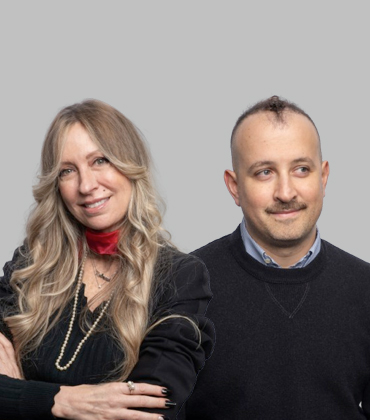 Rebecca Goetzke, Vice President, BSCE and LEED AP; Nicola Dardano, Ph.D., CEO
The Italy-based civil and infrastructure engineering consultancy works on buildings, bridges, strategic infrastructure, and other complex assets where age, changing demands, regulations, operational constraints, or hidden conditions make the right solution difficult to define.
With roots dating to the 1980s and more than 45 years of experience, A.I.C.E. has built its practice around investigation. Its teams study an asset before deciding how to intervene, combining historical research, surveys, diagnostics, material testing, structural analysis, monitoring, and digital technologies.
The objective is straightforward: understand the problem first, then select an intervention proportionate to the evidence.
Knowledge before Intervention
A.I.C.E. addresses uncertainty through tailored investigation programs. Three-dimensional laser scanning can establish geometry and deformation, while diagnostic and nondestructive testing helps reveal material conditions and hidden details. Static and dynamic monitoring provides evidence about how structures respond to loads, environmental conditions, and time. The resulting information can be incorporated into numerical models and BIM or HBIM environments, allowing engineers to compare measured behavior with analytical assumptions.
 That evidence gives clients a clearer basis for deciding whether an asset needs continued monitoring, localized repair, strengthening, seismic upgrading, or replacement. It also helps avoid unnecessary work and supports better control of cost, schedule, disruption, and long-term performance.
Rebecca Goetzke, Vice President, describes the investigative nature of A.I.C.E.s approach: “We have always approached engineering like detectives: investigating each asset to identify the root cause before developing a tailored solution.”
One Team, One Engineering Process
The company’s approach does not stop at structural assessment. A.I.C.E. brings structural, architectural, MEP, fire, safety, environmental, project management, and other capabilities into a coordinated process. This is a concrete benefit to clients, having all of these disciplines directly in-house thus providing immediate responses and technical assistance. A.I.C.E. is also an expert multidiscipline A-E with specialized experience in architectural design including ABA and life health safety/fire code compliance, structural, blast and seismic upgrade design, ASHRAE energy analyses and lifecycle cost analyses, LEED, commissioning during design and construction, safety during design and construction, work direction during construction, US design and construction world-wide, and much, much, more! BIM supports the integration, helping teams identify clashes, test alternatives, and understand how individual decisions affect the complete project.
 This model is particularly valuable for existing structures, where a structural intervention can affect building systems, architectural elements, safety provisions, drainage, lighting, energy performance, or operations. Keeping these disciplines connected reduces fragmented decision-making and gives clients a single engineering response.
The company also keeps much of its technical capability in-house, including surveying and diagnostic equipment, laser scanners, drones, and GPS instrumentation. That internal capability supports continuity from the initial investigation through design, construction supervision, testing, and turnover. Engineers who understand why a particular solution was selected can remain connected to its implementation and respond when site conditions differ from expectations.
Experience Tested in Complex Projects
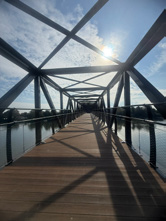
The value of this method becomes clearer when conditions are complicated. A.I.C.E.’s railway swing bridge project at Camp Darby, between Pisa and Livorno, brought together U.S. military requirements, Italian and European regulations, railway standards, waterway navigation, environmental constraints, and multiple public authorities. The project also required coordination within a protected natural area.
-
We are founded on the principle of doing in-depth surveys and diagnostics, being the detectives of the situation, understanding exactly where the core problems are in order to develop ad hoc solutions.
Site investigation produced a critical finding: a pressurized artesian layer containing natural methane gas was discovered at depth. That condition ruled out the originally assumed deep-pile foundation approach and required the foundation strategy to change before construction. The bridge itself had to preserve navigation on the Navicelli Canal, leading to a movable design that remains parallel to the canal when not in use and rotates into position for trains.
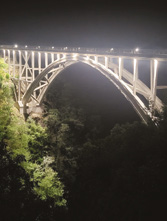
The Fiora River Bridge project in Tuscany presented a different challenge. The existing masonry bridge on the S.R.T. 74 Maremmana had a narrow roadway and a 20-ton load restriction. A.I.C.E. investigated the structure through laser scanning, inspections, material testing, reinforcement surveys, dynamic testing, and a full-scale static load test. The findings showed poor material characteristics, deterioration, and structural distress. After comparing strengthening and widening options, the company selected a new 138-meter steel-concrete composite bridge downstream, designed around current traffic and seismic requirements.
Research, Sustainability, and Digital Practice
 A.I.C.E. combines professional experience with continuing engagement in research and academia. CEO Nicola Dardano, Ph.D. in Computer Science and System Engineering from the IMT School for Advanced Studies in Lucca, is also active in structural engineering instruction at the University of Pisa. This connection helps A.I.C.E. transfer emerging technologies and research into practical engineering solutions, supporting advances in numerical modelling, BIM, structural monitoring, digital engineering, and other technologies where they create measurable value for clients.
“A.I.C.E. routinely offers clients the integration of the LEED protocol as an added-value framework, supported by Vice President Rebecca Lynn Goetzke, a LEED Accredited Professional. Thus A.I.C.E. provides consultancy for projects seeking LEED certification, and sustainability is integrated into A.I.C.E.s standard engineering approach to each project, supported by our in-house LEED AP, which considers energy performance, materials, user wellbeing, maintainability and lifecycle value alongside technical requirements in all of our projects. A.I.C.E. also reports a quality management system certified to ISO 9001 and information security practices aligned with ISO/IEC 27001.”
A Trusted Partner for What Comes Next
For A.I.C.E., growth is not simply about taking on more projects. It is about extending a model that combines experienced professionals, multidisciplinary capability, digital tools, research, and direct client involvement. The company wants to deepen its presence in Italy and international markets while preserving its technical independence and hands-on approach.
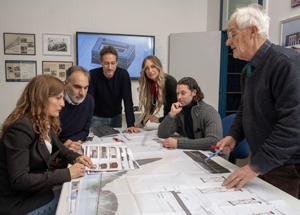 Nicola Dardano, CEO, explains the companys ambition: “We want to become a trusted partner in new markets, working hand in hand with clients to bring innovation, multidisciplinary expertise and digital technologies to their projects.”
This ambition is captured by A.I.C.E.’s #WeDesignTheFuture vision. More than a tagline, it expresses the belief that engineering should not only solve today’s problems, but anticipate tomorrow’s needs—connecting people, ideas and technologies to create safer, smarter and more sustainable infrastructure.
A.I.C.E. Consulting has been named Top Civil and Infrastructure Engineering Consulting in Europe 2026, recognizing the company’s work across complex civil and infrastructure challenges. Its proposition is simple: better engineering decisions come from better knowledge. By investigating, coordinating disciplines, and matching intervention to actual need, A.I.C.E. supports owners seeking resilient infrastructure.
When Civil Infrastructure Engineering Starts With Evidence
Civil and infrastructure engineering engagements often begin before an owner knows whether a structure needs repair, strengthening, replacement or simply more observation. That uncertainty makes procurement harder. A firm can present an impressive design record yet still push an intervention before the asset has been investigated closely enough. For public authorities and asset owners, the more useful distinction is whether an engineering partner can reduce uncertainty early and translate findings into proportionate action without losing that logic as the project advances.
Diagnostic depth should therefore sit near the center of the assessment. Site inspections and structural monitoring should be supported by non-destructive investigation where conditions warrant it. Those methods influence what gets designed and how much work is justified, while also showing when spending can reasonably be deferred. An early walkthrough may be sufficient to narrow the options. Longer monitoring can show whether cracking or movement is stable before a client commits to construction. The stronger consulting model does not treat investigation as a preliminary formality. It uses evidence to separate localized work from broader intervention and to explain the tradeoffs clearly enough for nontechnical decision-makers to act. Buyers should also examine who owns the diagnostic equipment and whether the same technical team can interpret results rather than passing data between disconnected parties.
Coordination becomes equally important once a project moves beyond diagnosis. Civil and infrastructure work rarely stays inside one discipline, particularly when structural changes affect building systems or when bridge work intersects with lighting, drainage, controls and other installed elements. Fragmented delivery increases the chance that design assumptions drift between teams or conflicts appear late. Buyers should examine whether structural and architectural work can be coordinated with building services inside one process. BIM should expose interferences before construction, while design responsibility should remain traceable from scoping into turnover. That continuity matters when an intervention changes after surveys or monitoring produce new evidence.
“AICE Consulting’s scope also includes BIM-based coordination and infrastructure design, giving clients a way to keep investigation findings connected to later design decisions.”
European infrastructure work also places weight on local approvals and standards. Technical competence alone does not shorten a review cycle when a consultant is unfamiliar with permitting routes or the expectations of public bodies. Cross-border or government work can add another layer when national requirements must coexist with client-specific technical standards. Relevant experience should be judged by project type and by the consultant’s ability to navigate approvals without separating regulatory coordination from engineering decisions. Documentation practices matter here. Design changes, agency comments, site findings and approval conditions need to remain visible to the people responsible for the next decision rather than being rediscovered during construction.
AICE Consulting combines civil and infrastructure design with in-house investigations, diagnostics, surveys and monitoring, then extends that work through construction supervision and testing. Its scope also includes BIM-based coordination and infrastructure design, giving clients a way to keep investigation findings connected to later design decisions. AICE Consulting examines the structure before fixing the intervention and can present different courses of action when conditions remain uncertain. That matters where owners need to avoid unnecessary work while preserving a clear path into design and construction. For projects that depend on early technical diagnosis and multidisciplinary coordination, while also requiring continuity through delivery and informed client decisions, AICE Consulting merits consideration.
...Read more
