
Thank you for Subscribing to Construction Business Review Weekly Brief

Breakthrough Properties
Sarah Williams, Vice President, Design & Construction
Leading at the Intersection of Science and the Built Environment
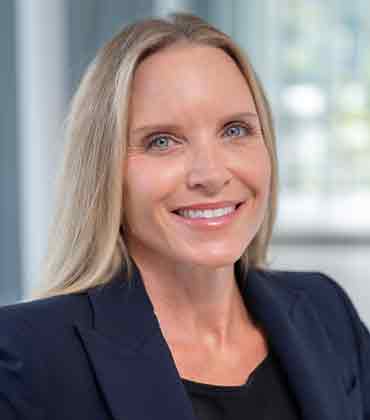
Sarah Williams
A Career Shaped by Experience
I was drawn to life sciences real estate because it combines technically complex design with a mission that has a direct impact on society and the betterment of humanity. Creating environments where researchers and innovators can develop therapies, technologies and discoveries that improve lives is incredibly rewarding.
Early in my career, I was primarily focused on delivering a variety of commercial construction projects, including higher education, multi-family residential, K-12 facilities, data center, healthcare and life science, in a range of sizes, on schedule and within budget, with a focus on preconstruction expertise and Pre-Planning.
Over time, my perspective has broadened to recognize that successful facilities are not just well-built—they are adaptable, resilient and designed to support scientific collaboration for decades. Today, I see every project as an opportunity to create spaces that enable innovation while providing long-term value for both occupants and owners.
Balancing Innovation, Functionality and Long-Term Sustainability
Balancing these priorities begins with understanding the client's scientific and operational goals. Innovation should solve real problems rather than simply introduce new technology. In life sciences, flexibility is often the most valuable form of innovation, since research programs evolve rapidly and facilities must adapt with minimal disruption.
The most successful projects are those where innovation, operational efficiency and sustainability reinforce one another instead of competing for priority.
Functionality remains the foundation of every decision. Laboratory performance, safety, reliability and user experience can never be compromised. At the same time, sustainability is no longer an optional consideration—it is a core business strategy. I look for opportunities to reduce energy consumption, improve building performance, and incorporate resilient systems that lower lifecycle costs while supporting environmental goals. The most successful projects are those where innovation, operational efficiency and sustainability reinforce one another instead of competing for priority.
Managing Multidisciplinary Teams in the Current Construction Environment
Successful projects depend on trust, communication and accountability. Life sciences projects bring together architects, engineers, contractors, scientists, developers and operations teams, each with different priorities and expertise. A leader's role is to align those perspectives around a shared vision and maintain transparency throughout the project.
I also believe curiosity and adaptability are essential leadership qualities. Our industry is evolving rapidly through advances in technology, construction methods and client expectations. Leaders need to ask thoughtful questions, stay informed on where the science is going and how buildings need to respond, remain open to new ideas and make informed decisions without losing sight of project objectives. Creating an environment where every team member feels respected and empowered to contribute ultimately leads to stronger collaboration and better outcomes.
Evolving Design and Construction Landscape
One of the biggest shifts is the growing emphasis on flexibility. Organizations want laboratories that can accommodate changing research programs without requiring extensive renovations. Digital technologies, including BIM, data analytics and digital twins, are also improving coordination, facility management and long-term building performance.
Sustainability expectations continue to rise as owners seek to reduce operational costs and meet ambitious environmental targets despite the high energy demands of laboratory buildings. At the same time, speed to market remains a significant driver, leading teams to adopt prefabrication, early contractor involvement and integrated project delivery strategies that improve efficiency while maintaining quality.
Advice for Emerging Design and Construction Professionals
Develop both technical expertise and strong interpersonal skills. Construction is ultimately a people business, and the ability to communicate effectively, build relationships and solve problems collaboratively will set you apart throughout your career.
Stay curious and commit to continuous learning. Technologies, regulations and client expectations are constantly evolving, particularly within life sciences. Seek opportunities to work across disciplines, ask questions and learn from experienced mentors. Finally, remember that the buildings we create have a lasting impact on the people who use them. Keeping that purpose in mind makes the work more meaningful and helps guide better decisions every day.
The articles from these contributors are based on their personal expertise and viewpoints, and do not necessarily reflect the opinions of their employers or affiliated organizations.
