
CLOSE
  • Roofing and Siding Systems
  • Doors and windows
  • HVAC
  • Steel Building APAC
  • Kitchen and Bath Europe
  • Construction Interiors
  • Construction Demolition and Recycling Europe
  • Construction MENA
  • Architectural Glass
  • Modular and Prefab Construction
  • Construction Engineering Services
  • Safety and Compliance Europe
  • Wall Systems
  • Waterproofing APAC
  • Flooring System
  • Forensic and Owners Representative
  • Startups APAC
  • Architectural Glass APAC
  • Roofing and Siding Systems Europe
  • Mechanical Electrical and Plumbing
  • Construction Bidding and Auctions
  • Architecture and Design Services
  • Concretes, Aggregates and Materials
  • Safety and Compliance APAC
  • Construction Demolition and Recycling APAC
  • Steel Building Europe
  • Construction Consulting
  • Roofing Systems APAC
  • Workforce Management and Staffing
  • Construction Latam
  • Landscaping
  • Construction Marketing
  • Modular Construction APAC
  • Modular Construction Canada
  • Construction Engineering MENA
  • Swimming Pool Construction
  • Construction Engineering Canada
  • Specialty Construction
  • Commercial Contractors
  • Scaffolding Contractors
  • Building Restoration and Maintenance
  • Doors and Windows Canada
  • Sustainable Construction APAC
  • Construction Law
  • Architectural Glass Canada
  • Building Information Modeling APAC
  • Construction Staffing
  • Insulation, Coating and Waterproofing
  • Cold Storage Construction Canada
  • Construction Management Canada
  • Swimming Pool Construction Canada
  • Scaffolding Canada
  • Flooring System APAC
  • Pre-Construction Services
  • Construction Staffing Europe
  • Precast Concrete Europe
  • Cold Storage Construction APAC
  • Apartment and Condominium Contractors Canada
  • MEP Canada
  • Foundation Construction Canada
  • Outdoor Construction
  • Construction Law APAC
  • Construction Saudi Arabia
  • MEP APAC
  • Decking Canada
  • Kitchen and Bath
  • Building Sealing Solutions Europe
  • Swimming Pool Construction APAC
  • Mould Remediation and Testing Europe
  • Mechanical Contractor Canada
  • Construction Consulting Europe
  • Construction Coating Europe
  • Landscaping Canada
  • Construction Management
  • Construction Management APAC
  • Flooring Systems Europe
  • Dummy
  • Commercial Contractors APAC
  • Commercial Contractors Europe
  • Concretes, Aggregates and Materials Europe
  • Concretes, Aggregates and Construction Materials APAC
  • Construction Cladding APAC
  • Concrete Canada
  • Residential Construction
  • Building Restoration and Maintenance Canada
  • Construction Interiors Europe
  • Modular and Prefab Construction Europe
  • Buinding Restoration and Maintenance Europe
  • Construction Forensic and Owners Representative Europe
  • Professional Services
  • Structures
  • Systems
  • Roofing and Siding Systems Canada
  • Professional Services Canada
  • Structures Canada
  • Systems Canada
  • Professional Services Europe
  • Structures Europe
  • Systems Europe
  • Training Services
  • Geotechnical Services Canada
Skip to: Curated Story Group 1
Construction Business Review
US
EUROPE
APAC
CANADA
MENA
LATAM
AUSTRALIA
About Us Conference Partner With Us
  • Europe
    • US
    • EUROPE
    • CANADA
    • AUSTRALIA
  • Professional Services
    Buinding Restoration and Maintenance
    Construction Consulting
    Construction Forensic and Owners Representative
    Construction Staffing
    Mould Remediation and Testing
    Safety and Compliance
  • Structures
    Building Sealing Solutions
    Commercial Contractors
    Construction Coating
    Construction Demolition and Recycling
    Construction Interiors
    Modular and Prefab Construction
    Precast Concrete
    Steel Building
  • Systems
    Concretes, Aggregates and Materials
    Flooring Systems
    Kitchen and Bath
    Roofing and Siding Systems
  • Leadership Perspectives
  • Insights
  • News

Thank you for Subscribing to Construction Business Review Weekly Brief

Construction Consulting Europe

Top Solutions
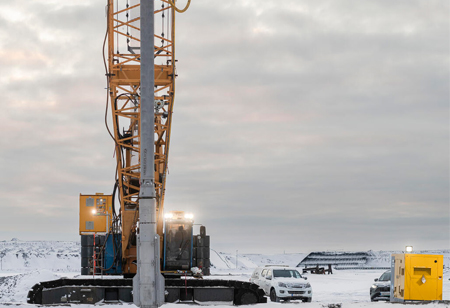
Keller Group Plc (LON: KLR): Engineering Buildability in Complex Ground Conditions
Keller Group Plc (LON: KLR)
Keller Group Plc (LON: KLR): Engineering Buildability in Complex Ground Conditions
James Wroath, CEO
Construction projects frequently encounter challenging subsurface conditions that complicate excavation, foundation stability and structural performance. Variable soils, groundwater presence and constrained urban footprints introduce uncertainty that can delay schedules and increase redesign cycles. Developers and contractors often rely on multiple specialists, creating coordination gaps between investigation, engineering design and field execution.

Keller Group plc (LON: KLR) addresses these complexities through an engineering-led ground improvement and foundation delivery model. Its services combine site investigation interpretation, design engineering and construction execution within coordinated workflows. This integrated approach allows projects to move from conceptual geotechnical analysis to implementation without disconnects that often slow decision-making.

The company’s methodology focuses on establishing buildability in difficult ground conditions. Engineers evaluate soil behaviour, load requirements and structural constraints, then match them with appropriate deep foundation or ground improvement solutions. Construction teams execute these designs using specialised equipment, ensuring that field conditions align with engineering assumptions and reducing uncertainty during installation.

Early coordination between engineering and delivery teams allows design adjustments before construction begins. This process helps reduce redesign cycles that arise when ground conditions differ from initial expectations. Project teams gain clarity on installation methods, sequencing and material requirements, enabling schedules to progress with fewer interruptions.

Integrated Geotechnical Methodology for Buildability
Keller structures its geotechnical methodology around understanding subsurface conditions and translating them into constructible foundation systems. Engineers analyse soil parameters, groundwater levels and load transfer requirements. These inputs guide selection between techniques such as bored piles, driven piles, rigid inclusions or vibro ground improvement.

Design and construction teams collaborate to refine installation approaches. Equipment selection, access planning and sequencing are reviewed during engineering development. This coordination ensures that the chosen solution can be installed efficiently within site constraints, particularly in urban environments where access is limited.

The methodology extends to performance monitoring during installation. Field data collected during piling or ground improvement activities is compared against design expectations. Adjustments are introduced when required, enabling consistent performance and reducing variability across foundation elements.

Integration of engineering and construction also supports risk reduction. Projects benefit from early identification of settlement risks, load distribution challenges or groundwater management needs. Addressing these factors during design limits modifications later in the construction cycle.

Global Execution Model Supporting Consistent Delivery

Keller operates through a global network of engineering and construction teams that share technical knowledge while adapting to local ground conditions. Regional teams bring familiarity with soil profiles, regulatory requirements and construction practices. This structure enables consistent delivery across infrastructure, industrial and urban developments.
Read more
LBB London Belgravia: Independent Risk Advisory for Complex Developments
LBB London Belgravia
LBB London Belgravia: Independent Risk Advisory for Complex Developments
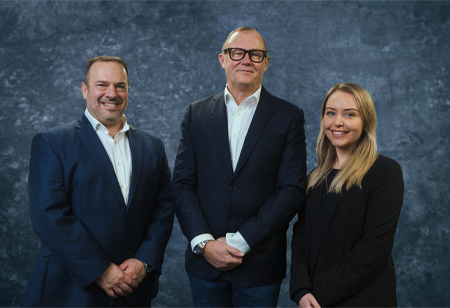
Alex Lyons, Commercial Director, Giles Fallan, CEO, Leah Bray, Operations Director
Why was LBB London Belgravia founded to address gaps in insurance advisory services?

Over a decade ago, Giles Fallan, now founder-CEO of UK-based specialist insurance consultancy LBB London Belgravia, stepped away from the insurer side of the latent defects insurance (LDI) market because he believed client service had fallen short. Insurers presented developers with quotations, but rarely with the strategic guidance needed to understand how they truly assessed risk. He established LBB to change that dynamic, embedding independence, insurer-side insight and long-term advocacy into its operating model from the outset.

“Transparency sits at the very centre of our work. We act as advocates for our clients in a very complex and fast-moving LDI market,” says Alex Lyons, commercial director.

How does insurer-side experience enhance advisory capabilities across the latent defects insurance market?

That advocacy draws on direct experience and a deliberate career decision. Much of the senior team moved from warranty providers and insurance groups into advisory roles for a specific reason. Over time, insurers began shifting their appetites: some toward high-volume, lower-value housing risks; others toward singular high-value towers. Those appetites rarely overlapped. Moving to the broker side meant spanning the whole market whilst carrying insurer-side knowledge across — including an understanding of how underwriters evaluate contractor track record, corporate strength, design specification and structural exposure — which enables a genuine full-market review.

Independence reinforces that approach. LBB places business across the whole latent defect insurance market, including with providers that transact directly with developers. Where the strongest solution sits outside a brokered placement, LBB makes that recommendation openly. Where the correct answer is to stay with an existing provider, LBB says so and steps back, trusting the relationship will bring the client back on the next project. That same full-market review has also identified comparable, robust, A-rated insurer options for PLC clients where incumbent arrangements no longer represent the best fit, delivering significant premium efficiencies within a single year.
Read more
State of Industry

Proactive Project Assurance: How Risk Advisors Are Shaping the Future of UK Construction

UK construction risk advisors embed proactive, data-driven assurance across lifecycles, strengthening decisions, managing uncertainty, and improving stakeholder confidence in projects.

The construction environment in the United Kingdom is moving through a period of structural reset. Project sponsors are no longer satisfied with traditional assurance models that rely on periodic reviews and retrospective reporting. Instead, they are seeking continuous insight into delivery risk, commercial exposure, and contractual alignment. This shift has elevated the role of construction risk advisors from compliance observers to embedded strategic partners. Their influence extends across the full lifecycle of a project from early feasibility through to final handover.

Risk advisors are reshaping project assurance by aligning it more closely with decision-making rather than documentation. They are no longer confined to checking adherence to frameworks. They are now actively involved in shaping procurement strategies, advising on contractor selection, and stress testing delivery programmes before ground is even broken. This proactive engagement enables project owners to identify hidden vulnerabilities early and recalibrate plans without costly disruption later.

Strategic integration across project lifecycles

A defining feature of modern risk advisory in the UK is deep integration across every phase of construction. Advisors are working alongside developers, financiers, and design teams from inception. Their role begins with evaluating land acquisition risks and extends to analysing planning constraints, supply chain resilience, and contractual frameworks. This early involvement ensures that assurance is not treated as a separate function but as a continuous thread woven into the project fabric.

As projects progress into delivery, risk advisors provide real-time oversight rather than static audits. They monitor contractor performance, assess change order impacts, and track emerging risks linked to labour availability and material volatility. Their insights are delivered in a way that supports immediate action rather than delayed reporting. This approach reduces the gap between risk identification and risk response.

In parallel, advisors are helping clients navigate evolving regulatory expectations. Building safety requirements, environmental standards, and compliance obligations are becoming more complex. Risk advisors act as interpreters of these frameworks and ensure that projects remain aligned without slowing progress. Their ability to translate regulatory intent into practical execution has become a key differentiator in project assurance.

Digital intelligence and predictive assurance

Technology is playing a central role in how risk advisors deliver value. Digital platforms are not just tools for tracking progress. They are engines of predictive insight. Construction risk advisors are leveraging data from multiple sources, including design models, site sensors, and contractor reports, to build dynamic risk profiles. These profiles evolve as the project advances and highlight areas that require intervention.

Predictive assurance allows stakeholders to anticipate issues before they materialise. Instead of reacting to delays or cost overruns, project teams can address root causes in advance. For example, patterns in subcontractor performance or procurement delays can be identified early and mitigated through targeted actions. This forward-looking capability is redefining what assurance means in practice.

Another important development is the use of integrated dashboards that provide a single source of truth for project risk. These dashboards bring together financial metrics, schedule data, and compliance indicators in a unified view. Risk advisors curate this information and present it in a format that supports executive decision-making. The emphasis is on clarity and relevance rather than volume of data.

Digital collaboration is also enhancing transparency across stakeholders. Investors, developers, and contractors can access consistent risk information, reducing disputes and building trust. Risk advisors act as custodians of this shared visibility and ensure data integrity throughout the project lifecycle.

Commercial discipline and stakeholder confidence

Beyond technical oversight, construction risk advisors are driving a stronger culture of commercial discipline. They are closely involved in contract structuring and negotiation to ensure fair and enforceable risk allocation. This includes evaluating payment mechanisms, performance incentives, and dispute resolution provisions. By addressing these elements early, advisors help prevent conflicts that can derail projects.

During execution, risk advisors monitor financial exposure with a level of detail that goes beyond traditional cost management. They assess the impact of variations, track contingent liabilities, and evaluate the financial health of key contractors. This continuous scrutiny enables project sponsors to maintain control over budgets and avoid unexpected financial shocks.

A key outcome of this approach is increased stakeholder confidence. Investors and lenders are placing greater emphasis on independent assurance as a condition for funding. Risk advisors provide the credibility needed to demonstrate that projects are being managed with rigour and foresight. Their involvement signals that risks are not only identified but actively managed.

In addition, advisors are helping strengthen relationships among project participants. By providing an objective perspective, they help align expectations and resolve tensions before they escalate. This collaborative influence contributes to smoother project delivery and reinforces the overall assurance framework.

Read more
Leadership Perspective
Contract Management and Sustainable Development: Collaboration for the Future of Construction
Clancy
Contract Management and Sustainable Development: Collaboration for the Future of Construction
Hannah Leggatt, Director of Environment and Sustainability

We are now in an era where environmental responsibility is reshaping the construction industry. Sustainability is not just an afterthought, and contract management is emerging as a powerful tool and lever for driving sustainable development.

What we are seeing is that environmental responsibility is not just a mechanism to ensure compliance. It is a strategic tool which can help embed sustainability into every phase of project delivery, from procurement and planning to delivery, operations and performance monitoring.

Turning Contracts into Sustainability Drivers

Modern contract frameworks are ever evolving to reflect the growing demand for environmental accountability and to ensure we can demonstrate a sustainable legacy.

At Clancy, sustainability is not just a peripheral clause. It’s a core commitment that is embedded at every level. Environment and sustainable objectives are integrated into contract delivery, along with clear KPIs, and mechanisms to monitor and track progress.

This approach ensures that sustainability is not just promised but measured, tracked and reported, while providing opportunity for continuous improvement. Contracts now serve as binding commitments to environmental stewardship, aligning client expectations and aspirations with operational realities.

Collaboration is Vital to Sustainable Development

Collaboration is also key and critical to ensuring sustainability. It needs to be embedded at the very start of the process, as sustainable contract management thrives on collaboration and adaptability. We need to ensure we foster open dialogue and shared ownership, ensuring teams are encouraged to identify synergies and propose enhancements.

[QUOTE1_Replace]

In a previous magazine article, I had shared that it is crucial for sustainability to be embedded across all project levels. This ensures we have a continuous feedback loop that enables us to capture learnings while sharing knowledge and support for leaving a sustainable legacy now and into the future. At Clancy, we have found this to be helpful to reinforce the reasons behind asking teams to make more sustainable decisions through sharing our success elsewhere within the business.

At Clancy, the culture of continuous improvement is reflected in onboarding practices. New team members receive curated resources, from carbon roadmaps to environment and sustainability polices, to support their understanding of sustainability criteria and increase their knowledge and awareness.  We need to ensure we are always bringing people together to be more sustainably aware and to help provide them with the tools, resources and mechanisms to make better and more sustainable decisions.

An Industry Responsibility

In today’s construction landscape, the convergence of contract management and sustainable development is no longer optional but essential. As infrastructure demands grow and environmental expectations intensify, the way contracts are structured, delivered and monitored must evolve to reflect a deeper commitment to sustainability.

We in the construction industry have the unique opportunity to lead by example, embedding sustainability into every clause, KPI, and outcome. As Ban Ki-Moon, the former Secretary-General of the United States said, “Sustainable development is the pathway to the future we want for all. It offers a framework to generate economic growth, achieve social justice, exercise environmental stewardship and strengthen governance”.

Building Tomorrow through Contracts Today

In the construction industry, every contract is more than a legal agreement. It is a promise to future generations. Through embedding sustainability into the very fabric of contract management, we are meeting today’s environmental requirements while helping shape a more resilient and sustainable tomorrow.

Sustainable development isn’t a destination. It’s a journey we commit to with every contract we sign. As leaders, collaborators, and innovators within this industry, we have the tools, mechanisms and responsibility to ensure that every project leaves a legacy of progress in infrastructure, as well as in environmental stewardship and sustainable development. The future of construction lies in our ability to align commercial success with environmental wellbeing, and that future begins with the contracts we write today.

The most powerful change agents in construction aren’t machines or materials. They’re the values we embed in our contracts. This shift requires courage, clarity and collaboration. It means challenging traditional procurement models, redefining success metrics, and empowering and providing our teams to think beyond the build. It means asking not just “what are we delivering?” but “how are we delivering it?”

We need to embrace contract management as a tool, mechanism and catalyst to drive innovation, foster collaboration and accountability and build solid partnerships that deliver positive sustainable solutions. Because when sustainability becomes a contractual standard, it becomes a cultural norm. That’s when real transformation begins.

Read more
Social Value: Investing in the Legacy of our Projects
Farrans Construction
Social Value: Investing in the Legacy of our Projects
Suzanne Lutton, Head of Stakeholder & Social Value

When I first started working in this industry over 20 years ago, social value wasn’t a term that had yet risen to prominence. It has become extremely important as more clients are looking for contractors and suppliers that prioritise and demonstrate effective social responsibility and community engagement.

Defining social value is far from straightforward, given the many contrasting definitions that exist across public and private organisations; however, we do understand significant impacts can be made on the society, environment, and economy in the area surrounding our projects. 

Farrans has always been a community-spirited contractor, but we have seen the need to develop a more strategic approach to planning, delivering and measuring the outcomes achieved, and we have made a social impact one of the main pillars of our business. 

Recent legislation explicitly requires the evaluation of Government tenders to consider social value commitments as part of the award decision. This has led to a step up in clients' expectations around social value delivery, both in terms of proper needs-based plans leading to strong delivery and, ultimately, the provision of robust evidence-based measurement. The winning tender should no longer be just about the lowest price, but the overall added value should be achieved. 

For this reason, Farrans has invested in our own in-house social value team, responsible for developing and supporting the delivery of all elements of this area within the business. We are a team of dedicated experts providing leadership on social value approaches and activities, educating and upskilling colleagues to create and expand organisational capability to support the delivery of social value.

Our team is involved from the very initial stages of a project, collaboratively and innovatively developing a programme of activity which aligns with the priorities of our clients and the local communities. For some, this may be a focus on sustainability or providing employment opportunities, while others will be keen on opening up learning opportunities for young people.We engage with our supply chain to educate and inform them on social value priorities.

We empower them through regular knowledge-sharing meetings in the early stages of procurement negotiations to enable collaboration and innovation. This enables us to develop relevant and impactful initiatives together. 

[QUOTE1_Replace]

At the end of every year, we like to look back on our impact. In 2023, for example, we supported 76 apprentices and 70 graduates, engaged with over 8,500 young people through education engagement, worked with over 450 local suppliers in the areas where we were active, and raised over £51,000 for charities across the UK and Ireland. We hosted over 37 sustainability-led events, supporting the protection of biodiversity, education on environmental issues, and support to different communities with the development of green spaces.

When we deliver major construction and civil engineering projects, we want to invite the local community on that journey with us. We want to make sure that they feel informed and that they can see that, as contractors, we are doing our best to leave their area improved from when we arrived. We won two national GO Excellence in Public Procurement Awards for our work at South Lake Leisure Centre in Northern Ireland and the Edinburgh Trams to Newhaven project in Scotland.

When it comes to innovation, we provided a best practice solution during the delivery of Edinburgh Trams to Newhaven, which we delivered in JV with our partners as Sacyr Farrans Neopul (SFN). A ‘Support for Business’ package was developed for businesses along the project route with many support measures, including help with deliveries and dispatches during the works. A key challenge was the diversity of the businesses in the Leith community, so we recruited local people to deliver the initiative.

Five Logistics Hubs were established, working in partnership with Sustrans Scotland, to bring trikes and trailers onto the street. The hubs managed over 87,500 deliveries and received 250+ pieces of positive feedback. In addition,, the team delivered on-street engagement,, including pop-up information points and sessions, for the wider community. 

This is only one example, but our social value priorities are reflected in processes and systems, from our policy to procurement to contract and delivery management, and they reflect our understanding of our customers, suppliers, and third-party partners. The social impact achieved is captured and continuously improved upon to ensure we add maximum value for the communities in which we work to make a real difference now and in the future.

Read more
Construction Business Review
Follow on LinkedIn

About

  • Home
  • About Us

Stay Connected

  • Subscribe
  • Newsletter
  • Sitemap

Contact Us

  • editor@constructionbusinessreview.com
  • sales@constructionbusinessreview.com
  • marketing@constructionbusinessreview.com

Legal

  • Editorial Policy
  • Privacy Policy
  • Terms of Use

© 2026 Construction Business Review. All rights reserved. Headquartered in Fort Lauderdale, FL, USA.

This content is copyright protected

However, if you would like to share the information in this article, you may use the link below:

https://www.constructionbusinessrevieweurope.com/s/construction-consulting-europe

We use cookies on this website to enhance your user experience. By clicking any link on this page you are giving your consent for us to set cookies. More info

I agree