

CLOSE
  • Specialty Construction Europe
  • Roofing and Siding Systems
  • Doors and windows
  • HVAC
  • Steel Building APAC
  • Kitchen and Bath Europe
  • Construction Interiors
  • Construction Demolition and Recycling Europe
  • Construction MENA
  • Architectural Glass
  • Modular and Prefab Construction
  • Construction Engineering Services
  • Safety and Compliance Europe
  • Wall Systems
  • Waterproofing APAC
  • Flooring System
  • Forensic and Owners Representative
  • Startups APAC
  • Architectural Glass APAC
  • Roofing and Siding Systems Europe
  • Mechanical Electrical and Plumbing
  • Construction Bidding and Auctions
  • Architecture and Design Services
  • Concretes, Aggregates and Materials
  • Safety and Compliance APAC
  • Construction Demolition and Recycling APAC
  • Steel Building Europe
  • Construction Consulting
  • Roofing Systems APAC
  • Workforce Management and Staffing
  • Construction Latam
  • Landscaping
  • Construction Marketing
  • Modular Construction APAC
  • Modular Construction Canada
  • Construction Engineering MENA
  • Swimming Pool Construction
  • Construction Engineering Canada
  • Specialty Construction
  • Commercial Contractors
  • Scaffolding Contractors
  • Building Restoration and Maintenance
  • Doors and Windows Canada
  • Sustainable Construction APAC
  • Construction Law
  • Architectural Glass Canada
  • Building Information Modeling APAC
  • Construction Staffing
  • Insulation, Coating and Waterproofing
  • Cold Storage Construction Canada
  • Construction Management Canada
  • Swimming Pool Construction Canada
  • Scaffolding Canada
  • Flooring System APAC
  • Pre-Construction Services
  • Construction Staffing Europe
  • Precast Concrete Europe
  • Cold Storage Construction APAC
  • Apartment and Condominium Contractors Canada
  • MEP Canada
  • Foundation Construction Canada
  • Outdoor Construction
  • Construction Law APAC
  • Construction Saudi Arabia
  • MEP APAC
  • Decking Canada
  • Kitchen and Bath
  • Building Sealing Solutions Europe
  • Swimming Pool Construction APAC
  • Mould Remediation and Testing Europe
  • Mechanical Contractor Canada
  • Construction Consulting Europe
  • Construction Coating Europe
  • Landscaping Canada
  • Construction Management
  • Construction Management APAC
  • Flooring Systems Europe
  • Dummy
  • Commercial Contractors APAC
  • Commercial Contractors Europe
  • Concretes, Aggregates and Materials Europe
  • Concretes, Aggregates and Construction Materials APAC
  • Construction Cladding APAC
  • Concrete Canada
  • Residential Construction
  • Building Restoration and Maintenance Canada
  • Pre-Construction Services Europe
  • Outdoor Construction Europe
  • Construction Interiors Europe
  • Modular and Prefab Construction Europe
  • Buinding Restoration and Maintenance Europe
  • Construction Forensic and Owners Representative Europe
  • Professional Services
  • Structures
  • Systems
  • Roofing and Siding Systems Canada
  • Professional Services Canada
  • Structures Canada
  • Systems Canada
  • Professional Services Europe
  • Structures Europe
  • Systems Europe
  • Training Services
  • Geotechnical Services Canada
Skip to: Curated Story Group 1
Construction Business Review
US
EUROPE
APAC
CANADA
MENA
LATAM
AUSTRALIA
About Us Conference Partner With Us
  • Europe
    • US
    • EUROPE
    • CANADA
    • AUSTRALIA
  • Professional Services
    Buinding Restoration and Maintenance
    Construction Consulting
    Construction Forensic and Owners Representative
    Construction Staffing
    Mould Remediation and Testing
    Pre-Construction Services
    Safety and Compliance
  • Structures
    Building Sealing Solutions
    Commercial Contractors
    Construction Coating
    Construction Demolition and Recycling
    Construction Interiors
    Modular and Prefab Construction
    Outdoor Construction
    Precast Concrete
    Specialty Construction
    Steel Building
  • Systems
    Concretes, Aggregates and Materials
    Flooring Systems
    Kitchen and Bath
    Roofing and Siding Systems
  • Leadership Perspectives
  • Insights
  • News

Thank you for Subscribing to Construction Business Review Weekly Brief

Flooring Systems Europe

Top Solutions
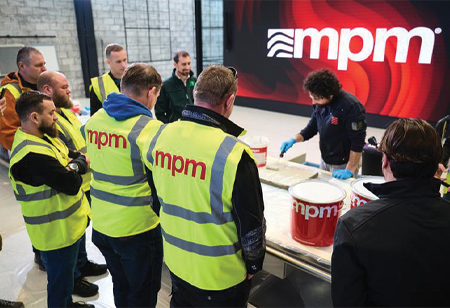
MPM: Next-Level Durability and Protection for Industrial Infrastructure
MPM
MPM: Next-Level Durability and Protection for Industrial Infrastructure
Martina Lambiase, Head of Marketing & Communication Office
For over 70 years, MPM, a family-owned chemical systems house, has been redefining industrial protection with cutting-edge solutions that enhance durability and longevity. Its expertise ranges from advanced resin flooring to high-performance waterproofing and robust protective coatings, each engineered to strengthen structures and minimize maintenance.

More than just a chemical manufacturer, MPM delivers innovations that help the construction industry stay ahead and ensure a safer, more reliable future.

MPM stands out for its research and development, through which it formulates state-of-the-art solutions that safeguard construction projects in the civil and private sectors. In a world where durability and efficiency are essential, factories, warehouses, food processing plants and critical infrastructure benefit from cutting-edge protective technologies. MPM’s commitment to reliable service and continuous innovation has established it as the trusted reference point for those seeking high-level solutions.

Dedication to excellence is exemplified by two groundbreaking innovations reshaping industrial resilience. Duroglass is a high-performance flooring system renowned for its unmatched durability and chemical resistance. Complementing this is Starflex, a next-generation waterproofing system engineered to protect against water infiltration, corrosion and environmental wear.

High-Performance Flooring for Demanding Environments

Duroglass is a high-strength epoxy and polyurethane flooring system built to withstand the harshest industrial conditions. From relentless mechanical stress and heavy traffic to extreme temperatures and chemical exposure, it delivers uncompromising reliability where it matters most. Superior wear and impact resistance ensure long-term performance while meeting the highest international safety and hygiene standards in factories, warehouses and production facilities.

With exceptional chemical resistance, it stands up to oils, acids and solvents, making it an essential choice for chemical manufacturing, pharmaceuticals and laboratories. The seamless, non-porous surface prevents chemical penetration, reducing contamination risks and preserving its structural integrity. High resistance to discoloration and staining ensures an enduringly clean appearance, even in environments with frequent spills and harsh cleaning agents.

Another defining feature is its thermal stability, able to withstand a temperature range of -40°C to +150°C. Whether exposed to boiling liquids, hot oils, or thermal shocks, it remains structurally sound, making it ideal for food processing, cold storage and high-heat manufacturing. Multiple thickness options ensure adaptability to industry-specific needs without compromising strength.

Hygiene and safety drive its design, making it ideal for industries with strict sanitary requirements, including healthcare, pharmaceuticals and food production. Compliant with EU Regulation 852/2004 for food hygiene, the waterproof, non-absorbent surface prevents bacterial growth. Its smooth finish supports effortless cleaning with high-temperature water and industry-approved disinfectants, ensuring a contaminate-free environment.

Workplace safety is enhanced with customizable surface finishes that minimize the risk of slips and falls. Automotive manufacturing and large-scale production facilities benefit from compliance with stringent safety regulations, ensuring a secure, stable surface for workers and equipment.
Read more
Bechtel: Building the Future, Brick by Innovative Brick
Bechtel
Bechtel: Building the Future, Brick by Innovative Brick
Craig Albert, President and COO
When driving across the Bay Bridge in San Francisco or admiring the towering 726-foot Hoover Dam, we often marvel at their historical significance. But do we ever consider the company behind these engineering feats? It’s none other than Bechtel, a global leader in infrastructure development. Since its founding in 1898, Bechtel has completed over 25,000 projects in 160 countries across all seven continents. Its impact is worldwide, from power plants to transportation networks, shaping economies and connecting nations.

It’s Not Just Construction, It’s Smart Construction

Success in large infrastructure projects goes beyond building—it requires innovation. These endeavors involve vast subcontractor networks, thousands of workers and billion-dollar budgets. Decades of expertise enable Bechtel to manage complexities precisely, ensuring projects are completed efficiently and built for longevity.

A key component of this success is supply chain management. With billions in annual expenditures, Bechtel ensures responsible materials sourcing, even in remote locations. Digital project management tools provide real-time tracking, seamlessly coordinating teams across the globe. Integrating scheduling, cost control and risk management keeps projects on time and within budget.

Harnessing Technology for Faster Projects

Technology is at the heart of Bechtel’s operations. The company employs cutting-edge innovations like 3D, 4D and 5D modeling, cloud-based solutions and mobile platforms to optimize project execution. These tools accelerate timelines, enhance efficiency and improve quality.

“We must push these technologies down the cost curve by building more units. Once standardization and repetition are achieved, construction schedules are shortened and costs go down. This is true for every aspect of the project delivery, including engineering, permitting, manufacturing and construction,” says Craig Albert, President and COO.
Read more
State of Industry

Italy's Leap into Smart and Sustainable Waterproofing

Italy's waterproofing and flooring industry is undergoing significant transformation, driven by advancements in material science, digital manufacturing, and sustainable solutions. The sector will be characterised by the rapid integration of cutting-edge technologies in both product development and installation methodologies. As demand continues to rise for solutions that seamlessly blend aesthetic appeal with enhanced durability and moisture resistance, top companies in flooring systems are leveraging modern engineering and design to establish new performance benchmarks.

Over the past few decades, material science advancements have redefined the flooring industry's possibilities. At the forefront of these innovations are cutting-edge polymer formulations and advanced composite materials, which offer exceptional durability and waterproof performance while seamlessly aligning with contemporary design standards.

Polymer Advancements and Rigid Core Technologies

Recent advancements in polymer technology have transformed rigid core flooring systems, enhancing dimensional stability and water resistance. Key innovations in core materials—such as magnesium oxide (MgO), stone polymer composites (SPC), and high-density fiberboard (HDF)—have enabled the development of highly durable and waterproof flooring solutions. The flooring solutions provide a solid foundation for ultra-thin hardwood veneers and ceramic tile reproductions, offering an aesthetically refined yet highly resilient flooring option for residential and commercial applications. Furthermore, the introduction of composite-engineered woods integrates authentic wood veneers with high-performance waterproof cores, bridging the gap between natural aesthetics and advanced protective capabilities. This hybrid construction method enhances durability and expands design versatility, accommodating a broad range of interior styles and functional requirements.

Surface Engineering and Nano-Enhanced Finishes

Parallel to core material advancements, innovations in surface engineering have significantly improved flooring performance. Nano-enhanced coatings and finishes create highly impermeable surfaces that prevent water penetration while preserving the material's natural texture and warmth. Hydrophobic treatments further reinforce this protection, preventing liquid absorption into seams and extending the flooring system's longevity.

Modern multi-layered lacquers and sealants provide up to 24-hour spill resistance while enhancing stain resistance, ensuring that floors maintain their aesthetic integrity even under heavy use. By integrating these cutting-edge surface technologies, manufacturers can offer flooring solutions that withstand daily wear in high-traffic commercial environments and luxury residential spaces—without compromising design appeal.

Advanced Locking Systems and Digital Manufacturing

Technological advancements in mechanical and digital solutions drive industry improvements, particularly in optimising efficient and waterproof installation methods.

Next-generation locking systems have revolutionized flooring installation by providing secure, watertight joints without additional adhesives. These systems, with their advanced drop-lock mechanisms and specialized polymer gaskets, create a triple-seal barrier, effectively preventing moisture migration through panel joints. The precision-engineered designs enable rapid and efficient installation, while the magnetic alignment systems ensure sub-millimeter accuracy, thereby reducing installation time and costs. This is a significant advancement in the industry, improving both the efficiency and waterproofing of installation methods.

High-definition digital printing technology redefines the aesthetic and functional aspects of flooring, facilitating rapid customisation of patterns, textures, and finishes. This digital advancement enhances sustainability by optimising production processes and reducing dependence on traditional manufacturing methods.

IoT-enabled smart flooring solutions are a testament to the industry's commitment to user experience. These solutions integrate sensor networks to monitor environmental conditions, user behavior, and structural integrity in real time. This real-time monitoring offers enhanced performance and data-driven insights, ensuring that the flooring systems are always operating at their best. This focus on user experience makes stakeholders feel considered and valued, as their needs and comfort are at the forefront of industry innovation.

Sustainability and Environmental Innovations

Sustainability has become a cornerstone of the waterproofing and flooring systems industry. Manufacturers are not only advancing performance standards but also adopting environmentally responsible practices to reduce their ecological footprint. This commitment to sustainability, which includes the use of recycled materials, low-emission, water-based technologies, and energy-efficient production and installation methods, reassures stakeholders about the industry's dedication to environmental stewardship. It also sets new standards for environmental performance within the construction sector.

The construction industry increasingly adopts circular economy principles by integrating recycled materials into new flooring products, such as waterproof membranes. This approach minimises environmental impact while supporting sustainability objectives. Additionally, using low-emission, water-based technologies—including water-based polyurethane finishes and solvent-free adhesives—enhances waterproofing while improving indoor air quality. Furthermore, energy-efficient production and installation methods, such as rapid-curing materials and low-temperature polymer processes, are being implemented to reduce energy consumption. This transition to greener technologies establishes new standards for environmental performance within the construction sector.

Italy's flooring industry is driven by technological advancements, enhanced installation techniques, and a strong emphasis on sustainability. The market is expected to see increased specialisation in product segmentation, with waterproof solutions gaining prominence across residential, commercial, hospitality, and institutional sectors.

Innovations in digital printing and advanced surface treatments will enable greater design flexibility and customisation, catering to evolving consumer preferences. Additionally, integrating smart technologies, including IoT-based solutions, will enhance the functionality and aesthetic appeal of flooring systems. Real-time data collection and monitoring will optimise maintenance schedules, improve operational efficiency, and contribute to better energy management and extended product lifecycles.

As the Italian market embraces these innovations, manufacturers and end users can look forward to a future of continuous innovation. This dedication to pushing the boundaries of performance and durability while aligning with broader industry trends toward sustainability and digital integration in construction and design is sure to excite stakeholders about the future possibilities in the industry.


Read more
Leadership Perspective
Revolutionizing Construction: The Marvels of Modular Construction
Impresa Pizzarotti & C. S.p.A.
Revolutionizing Construction: The Marvels of Modular Construction
Ivan Bevilacqua, Project Leader Control Italia

Ivan Bevilacqua, a Smart Infrastructures expert with an MBA and IPMA certification, highlights a career characterized by adaptable leadership in Civil Engineering. His education includes an International MBA from Business School POLIMI - Milan and a Master Degree in Civil Engineering from University La Sapienza - Rome.

As the Head of Smart Infrastructures at Impresa Pizzarotti SpA in Parma - Italy, Ivan oversees projects in maintenance, digitalization, IoT, technological integration, energy efficiency, and AI/ML. Previously, he worked as Site Manger on challenging projects such as the High Speed Third Giovi Rail Crossing in Genoa.

Ivan's passion for streamlining production processes is evident in his research. With a proactive mindset, he remains focused on continuous learning and embraces change in the dynamic field of Smart Infrastructures.

In the constantly evolving field of construction, modular construction is emerging as an innovation that revolutionizes the industry. This method involves producing prefabricated components in a factory and assembling them on-site, offering numerous advantages in efficiency, quality, and sustainability. This article explores modular construction's principles, benefits, and advancements, highlighting a future where this approach may become the standard. 

Modular construction involves creating prefabricated components, called 'modules,' ranging from small residential units to large commercial structures. These modules are crafted in controlled environments, reducing the impact of weather conditions and enhancing construction precision. 

Modular construction is revolutionizing the construction industry, with applications ranging from small residential units to large commercial and industrial complexes. Modular units typically include structural and functional elements such as walls, floors, ceilings, and sanitary fixtures. However, modular construction also encompasses advanced solutions, such as fully furnished residential units designed for immediate occupancy.

Evident Advantages

Modular construction has numerous advantages. Firstly, it is highly efficient in completing projects due to a significant portion of the work being done in a controlled factory environment, reducing on-site construction times. Additionally, constructing modules in dedicated facilities allows for ongoing modernization and enhanced efficiency in these plants. 

Secondly, factory production ensures consistent quality control. This enables uniformly applying high standards to each module, reducing errors and ensuring that every component aligns with the project's unique requirements. 

Thirdly, modular construction actively contributes to environmental sustainability. Factory production minimizes waste and resource consumption, while the prospect of disassembling and reusing modules in the future helps to reduce construction waste. Finally, modularity offers exceptional design flexibility. Customizing modules to meet a client's specific requirements allows for creating entirely distinctive buildings tailored to individual preferences and needs.

[QUOTE1_Replace]

Additionally, scalability benefits become increasingly evident as the number of modular elements increases. This versatile approach can be applied to various projects, ranging from small residential to large commercial complexes.

Recent Innovations

Over the years, modular construction has continued to evolve, integrating recent technologies, materials, and methodologies that drive innovation in the field. Among the latest trends in modular construction, we find three huge innovations:

Smart Modular Buildings represent a groundbreaking evolution in construction, marked by integrating smart technologies within their modules. These "smart" buildings can continuously monitor and autonomously adjust the indoor environment to enhance comfort and maximize energy efficiency. 

Read more
Toward a Functional Digital Twin for Retail: a Critical Challenge in Digital Systems Design
Unibail-Rodamco-Westfield
Toward a Functional Digital Twin for Retail: a Critical Challenge in Digital Systems Design
Moad Ziadi, Project Management Director Europe

Moad Ziadi is currently the Project Management Director for Europe at Unibail-Rodamco-Westfield, the world’s largest commercial real estate company operating in Europe and the United States. With a career spanning more than 25 years, he has had the opportunity to work in development and construction within an international context, particularly in the Caribbean, Russia, Singapore, the Middle East and Europe. His experience covers a wide range of projects, including stadiums, offices, hotels, flagship shopping malls and residential developments. Ziadi is also a visiting professor at the ESTP Engineering School in Paris.

Through this interview, Ziadi explores the challenges facing the retail real estate industry, drawing on his extensive experience since joining Unibail-Rodamco-Westfield. He shares insights into the obstacles encountered by designers and builders when developing a digital twin model that can also be used for asset facility management.

Digitalization now reigns over all sectors of economic activity. Construction and civil works are not excluded from this wave of progress.

In the field of design and construction, the most notable digital innovation is the use of digital platforms and Building Information Modelling (BIM), starting as early as the design stage. Clients were captivated by the immersive 3D animations BIM offered and, with the aid of augmented reality, could envision the finished space even before the first foundation pit was dug. Architects quickly moved away from unintuitive 2D plans (particularly confusing for nonexpert clients) in favour of more user-friendly perspectives.

Over time, the 3D model evolved into a more robust digital system, integrating a comprehensive dataset— product datasheets, EPDs’, procurement and execution schedules, cost control dashboards, on-site quality control protocols, handover process surveys and snagging management tools. These digital resources are undeniably transforming a sector as ancient as civilization itself, yet the true reality of construction still resides on-site, not onscreen.

When BIM began gaining traction in Europe in the early 2000s, France lagged behind. Major players lacked both the tools and the training. In response, small startups founded by young tech-savvy entrepreneurs began partnering with large construction, engineering and architecture firms to bridge the gap. Many organizations were not yet ready for this transformation and implementing BIM often resulted in increased costs for clients and developers.

[QUOTE1_Replace]

In 2013, I organized a conference at Unibail-RodamcoWestfield, bringing together leading architectural and engineering firms from across Europe. I posed a simple question—what framework can we define in the retail industry to create a standardized digital twin that supports project management, design coordination and future facility operations?

From a development project management standpoint, I concluded that mandating a BIM charter could increase design fees by up to 30 percent. For asset management, the challenge was even greater. Depending on the defined scope, the impact on design costs could range from 30 percent to as much as 100 percent.

This finding was surprising, especially considering the repeated claims from BIM advocates that digital modelling leads to lower costs. I soon realized—cost reductions are only achieved when the BIM charter is created by the designers themselves following their own needs. For clients, developers or property companies, this “revolution” often meant the creation of new positions “BIM Managers and Coordinators” whose costs added up without delivering clear value to the end user.

Each time I asked, “What does the client actually gain?” I received the same response—“Better plan coordination and fewer design clashes.” Yet, every time a software representative raised this point, I reminded them of their contractual obligation: “You owe the client design coordination with or without BIM.” I concluded that BIM is merely a tool. Providers must remember their obligation to deliver results, not just to follow a process. The client pays for coordinated design, not for BIM itself.

Still, we couldn’t ignore the digital revolution. We had to organize our approach to avoid disorganized adoption, which could harm rather than help.

When several designers, engineers and architects—each with different BIM practices—are brought together under the same contract, it’s often easier to adopt a light BIM charter. This approach gives each party enough flexibility to work efficiently without forcing them to overhaul their processes and avoids unnecessary coordination bottlenecks.

Integrating BIM into the tendering process presents challenges as well. Mistakes in digital models can lead to claims from contractors. Moreover, contractors often use their own BIM environments for execution studies, which add complexity and dilutes the benefits of digitization, leaving the client with few immediate returns on investment.

I didn’t want to stop the digitalisation integration at design stage. I aimed to extend the digital model into the operational phase. With Unibail-Rodamco-Westfield holding sixty-five billion euros in assets across Europe and the US, developing digital twins of these assets could both boost their value and transform design and construction.

Beyond drawings coordination, these digital twins would become powerful operational tools covering both soft services (cleaning, CCTV, etc.) and hard services (technical maintenance, lifecycle management).

This approach also enables unprecedented ESG visibility. Digital modelling allows for precise energy tracking and compliance with new taxonomy regulations, as well as carbon footprint monitoring. Platforms like “Madaster”, which we piloted on the “Mall of the Netherlands” Westfield development, make it possible to establish a “materials bank” a pioneering effort for retail developers.

But this model has its limits especially in retail.

I challenged engineering teams to define how we could create a digital twin for a retail project that supports both development and operation. The answers were incomplete and revealed the retail sector’s unique incompatibility with current BIM standards.

There are several reasons for this incompatibility and digital industry should consider these reasons to gain ground in this still unexploited sector:

The stakeholder uncertainty: Retail development projects often launch before all tenants are known. These stakeholders later request design changes, which can be difficult to implement in rigid, “heavy” BIM models that don’t adapt easily.

Divided project responsibilities: Developers usually don’t design MEP systems or tenant fit outs within the leased areas. Much of the building’s data depends on how tenants choose to develop and manage their spaces.

Most retail development projects are carried out on existing assets, which are mostly old and require, for BIM modeling, a thorough survey of the existing building—a task made difficult when the building is still in operation.

Retail is a living asset: In a shopping mall including 200/250 leases, there is typically a 5 to 15 percent annual reletting. Maintaining an up-to-date BIM model requires dedicated resources. As a result, the property companies conclude that they must ultimately prioritize the real twin— the physical asset that generates their income.

Read more
Construction Business Review
Follow on LinkedIn

About

  • Home
  • About Us

Stay Connected

  • Subscribe
  • Newsletter
  • Sitemap

Contact Us

  • editor@constructionbusinessreview.com
  • sales@constructionbusinessreview.com
  • marketing@constructionbusinessreview.com

Legal

  • Editorial Policy
  • Privacy Policy
  • Terms of Use

© 2026 Construction Business Review. All rights reserved. Headquartered in Fort Lauderdale, FL, USA.

This content is copyright protected

However, if you would like to share the information in this article, you may use the link below:

https://www.constructionbusinessrevieweurope.com/s/flooring-systems-europe

We use cookies on this website to enhance your user experience. By clicking any link on this page you are giving your consent for us to set cookies. More info

I agree