
Thank you for Subscribing to Construction Business Review Weekly Brief

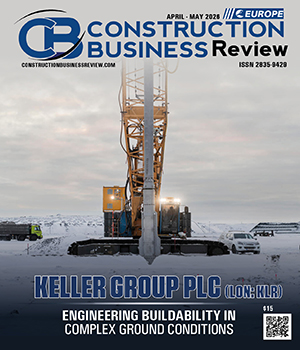
Construction projects frequently encounter challenging subsurface conditions that complicate excavation, foundation stability and structural performance. Variable soils, groundwater presence and constrained urban footprints introduce uncertainty that can delay schedules and increase redesign cycles. Developers and contractors often rely on multiple specialists, creating coordination gaps between investigation, engineering design and field execution. Keller Group plc (LON: KLR) addresses these complexities through an engineering-led ground improvement and foundation delivery model. Its services combine site investigation interpretation, design engineering and construction execution within coordinated workflows. This integrated approach allows projects to move from conceptual geotechnical analysis to implementation without disconnects that often slow decision-making. The company’s methodology focuses on establishing buildability in difficult ground conditions. Engineers evaluate soil behaviour, load requirements and structural constraints, then match them with appropriate deep foundation or ground improvement solutions. Construction teams execute these designs using specialised equipment, ensuring that field conditions align with engineering assumptions and reducing uncertainty during installation. Early coordination between engineering and delivery teams allows design adjustments before construction begins. This process helps reduce redesign cycles that arise when ground conditions differ from initial expectations. Project teams gain clarity on installation methods, sequencing and material requirements, enabling schedules to progress with fewer interruptions. Integrated Geotechnical Methodology for Buildability Keller structures its geotechnical methodology around understanding subsurface conditions and translating them into constructible foundation systems. Engineers analyse soil parameters, groundwater levels and load transfer requirements. These inputs guide selection between techniques such as bored piles, driven piles, rigid inclusions or vibro ground improvement. Design and construction teams collaborate to refine installation approaches. Equipment selection, access planning and sequencing are reviewed during engineering development. This coordination ensures that the chosen solution can be installed efficiently within site constraints, particularly in urban environments where access is limited. The methodology extends to performance monitoring during installation. Field data collected during piling or ground improvement activities is compared against design expectations. Adjustments are introduced when required, enabling consistent performance and reducing variability across foundation elements.
Construction Consulting
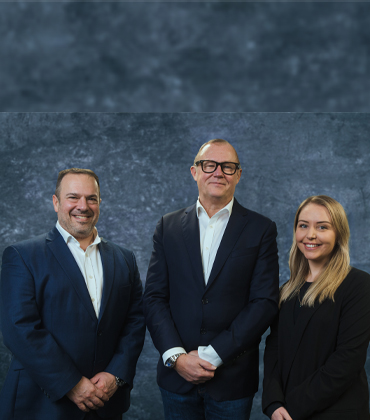
Why was LBB London Belgravia founded to address gaps in insurance advisory services? Over a decade ago, Giles Fallan, now founder-CEO of UK-based specialist insurance consultancy LBB London Belgravia (LBB), stepped away from the insurer side of the latent defects insurance (LDI) market because he believed client service had fallen short. Insurers presented developers with quotations, but rarely with the strategic guidance needed to understand how they truly assessed risk. He established LBB to change that dynamic, embedding independence, insurer-side insight and long-term advocacy into its operating model from the outset. “Transparency sits at the very centre of our work. We act as advocates for our clients in a very complex and fast-moving LDI market,” says Alex Lyons, commercial director. How does insurer-side experience enhance advisory capabilities across the latent defects insurance market? That advocacy draws on direct experience and a deliberate career decision. Much of the senior team moved from warranty providers and insurance groups into advisory roles for a specific reason. Over time, insurers began shifting their appetites: some toward high-volume, lower-value housing risks; others toward singular high-value towers. Those appetites rarely overlapped. Moving to the broker side meant spanning the whole market whilst carrying insurer-side knowledge across — including an understanding of how underwriters evaluate contractor track record, corporate strength, design specification and structural exposure — which enables a genuine full-market review. Independence reinforces that approach. LBB places business across the whole latent defect insurance market, including with providers that transact directly with developers. Where the strongest solution sits outside a brokered placement, LBB makes that recommendation openly. Where the correct answer is to stay with an existing provider, LBB says so and steps back, trusting the relationship will bring the client back on the next project. That same full-market review has also identified comparable, robust, A-rated insurer options for PLC clients where incumbent arrangements no longer represent the best fit, delivering significant premium efficiencies within a single year..
Construction Coating

Revolutionizing Construction: The Marvels of Modular Construction
Ivan Bevilacqua, Project Leader Control Italia, Impresa Pizzarotti & C. S.p.A.
Building Sealing Solutions
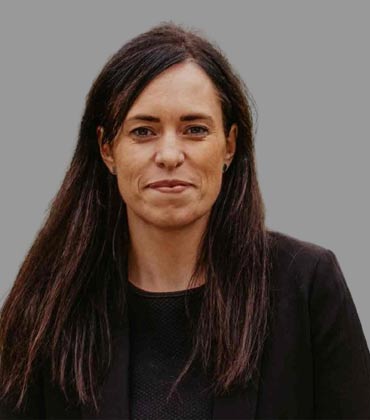
Social Value: Investing in the Legacy of our Projects
Suzanne Lutton, Head of Stakeholder & Social Value, Farrans Construction
Construction Consulting
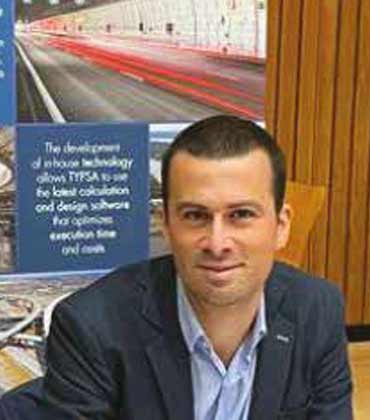
The Evolution and Modern Challenges of Prefabrication in Concrete Construction
Marco Bonomo, Head of Structural Department (UK & Ireland), TYPSA
Construction Coating

The Evolution and Future of Prefabricated Construction in Poland
Marcin Dudrak, Head of Procurement, Gülermak Heavy Industries Construction & Contracting Co. Inc [IST: GLRMK]
Concretes, Aggregates and Materials

Embracing Precast Concrete in Modern Construction
Stuart Marsh, Senior Associate Principal, Structural Engineer, Skidmore, Owings & Merrill (London)
Construction Consulting

Five Reasons Why AEC Investing Will Take Off in the Next 12 Months
Patric Hellermann, Founder and General Partner, Foundamental, Global ConstructionTech VC

IN MY OPINION
Modular Construction
Contract Management and Sustainable Development: Collaboration for the Future of Construction
Hannah Leggatt, Director of Environment and Sustainability, Clancy

LAST WORD
Mould Remediation and Testing
Safety: Soletanche Bachy goes into virtual reality to master risks!
Antoine Morand, Group Health & Safety Director –Executive Committee Member, Geoquest
IN FOCUS

Understanding the Landscape of Europe's Construction Labour Market
Europe's construction sector faces labour shortages and regulations while adopting technology to enhance productivity and attract skilled workers.
Proactive Project Assurance: How Risk Advisors Are Shaping the Future of UK Construction
UK construction risk advisors embed proactive, data-driven assurance across lifecycles, strengthening decisions, managing uncertainty, and improving stakeholder confidence in projects.
EDITORIAL
Risk-Aligned Execution in Modern Construction
Risk discipline and early-stage alignment are increasingly defining outcomes in construction and development. In this edition of Construction Business Review Europe, the focus is on how advisory models are evolving to address regulatory complexity, insurer scrutiny, and the growing cost of design-stage missteps.
Our cover story, LBB London Belgravia, recognized as the Top Construction Risk and Warranty Advisory in the UK 2026, shows how independent, insurer-informed advisory improves project certainty. Founded to address gaps in latent defects insurance guidance, the firm operates with transparency, full-market access, and continuous client advocacy. Its model integrates insurer expertise with early engagement, enabling developers to align design, materials, and funding with underwriting expectations before construction. This has delivered outcomes including premium efficiencies through full-market reviews and securing A-rated coverage in complex redevelopment scenarios. By staying engaged across the lifecycle, the firm acts as an embedded risk partner rather than a transactional intermediary.
Across the broader award landscape, the industry is converging on execution-led operating models. Leading organizations are prioritizing structured advisory, regulatory alignment, and financial robustness as core disciplines rather than differentiators. Greater emphasis is being placed on underwriting transparency, coordinated stakeholder engagement, and disciplined project evaluation, particularly as development complexity increases. This shift is redefining how risk is assessed and managed, with a clear move toward accountability, insurability, and long-term project resilience.
At a leadership level, there is a growing focus on transparency and active advocacy within fragmented insurer environments. Early engagement is becoming a critical control point, enabling alignment between design decisions, funding structures, and underwriting expectations before risks materialize. This reflects a broader industry transition from reactive problem-solving to proactive risk planning embedded at the earliest stages of project delivery.
Firms that embed risk intelligence early are already outperforming. This shift is redefining how projects are structured and delivered. We invite readers to examine these models and apply their principles to future development strategies.
