
Thank you for Subscribing to Construction Business Review Weekly Brief

BXP
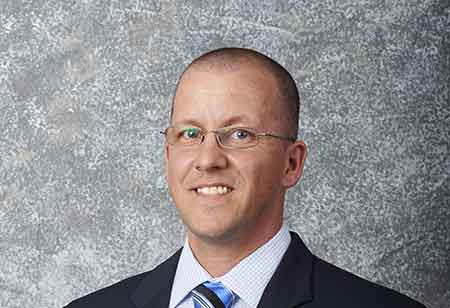
Daniel G. Murtagh, Vice President of Engineering
Keeping Projects on Track: Goals, Balance, Code, Technology, and Leadership

Daniel G. Murtagh
Tenant interior projects move fast, involve many stakeholders, and are full of tradeoffs. After years in the industry, I’ve found that the teams that consistently deliver strong outcomes tend to do a few fundamentals well: they set clear goals early, protect those goals through inevitable budget and scope pressure, balance architectural intent with building systems realities, and lead in a way that keeps every contributor engaged.
1. Start with goals and make them “sticky”
Every project needs a small set of goals and objectives that are specific enough to guide decisions (and short enough that the team can remember them). The point isn’t to create a slogan—it’s to create a decision filter. When a new request shows up late, or value engineering begins, the first question should be: Does this support the goals, or does it dilute them?
2. Budget matters—but it shouldn’t rewrite the mission
Budgets are real constraints, but they shouldn’t automatically override the needs of the project. When cost becomes the only yardstick, teams can unintentionally reduce the long-term value of the space—and, over time, the value of the broader asset. Good cost management is disciplined and transparent: it targets waste, prioritizes what matters most, and makes tradeoffs intentionally rather than by default.
3. Balance architecture and engineering for a quality outcome
In tenant interiors, it’s easy for architectural features to dominate attention. But the project succeeds (or fails) just as much on mechanical, electrical, and plumbing performance—comfort, maintainability, reliability, energy use, and the ability to adapt over time. The best outcomes come from treating architecture and engineering as complementary, not competing, priorities.
When cost becomes the only yardstick, teams can unintentionally reduce the longterm value of the space—and, over time, the value of the broader asset.
4. Use code as clarity—not as a loophole
Scope debates happen on every project: What is truly required? What can be deferred? What is “nice to have”? Building codes often bring clarity by codifying minimum requirements and removing some subjectivity from the conversation. That said, code is a baseline, not a design target. Use it to settle disputes about essentials—but don’t let “minimum compliant” become the standard if it undermines the project’s objectives.
5. Choose technology with intention
Innovation is easier when goals are well defined, because you can evaluate new tools and systems against a clear purpose. The challenge is separating what’s ready for prime time from what’s still experimental. Technology is a moving target, so teams need a practical approach:
• Fit to purpose: Does it directly support the project goals and operations?
• Risk awareness: What happens if it underperforms—do we have a fallback?
• Maintainability: Can the owner operate and service it without heroic effort? • Proven performance: Where has it worked before, and under what conditions?
6. Lead in a way that gets the best out of the team
Leadership is what keeps fundamentals from slipping under pressure. It’s the steady focus on priorities, the willingness to make decisions, and the ability to motivate people to do their best work. Over time, you can learn something from everyone you work with—good habits to adopt, mistakes to avoid, and styles that do (or don’t) fit your personality.
Most importantly, everybody on the team counts. When people feel like equal contributors, they bring problems forward earlier, collaborate more readily, and take ownership of the outcome.
Conclusion
Tenant interior projects will always involve constraints, surprises, and competing opinions. But when you protect clear goals, manage budget tradeoffs thoughtfully, balance architecture with engineering, apply code as a baseline, select technology intentionally, and lead with respect for the whole team, you significantly increase the odds of delivering a space that performs well—and holds its value over time.
The articles from these contributors are based on their personal expertise and viewpoints, and do not necessarily reflect the opinions of their employers or affiliated organizations.
Unlocking Your Potential: 5 Keys to Advancing Your Career in Property Management
Leanne C. Reynolds, Director, Property Management, Colliers [NASDAQ: CIGI]
-450x308_V16N.jpg)
The Internet of Drones: Redefining Construction in the age of Intelligence
Paul Doherty, President and CEO, the digit group, Inc.

From Incident to Insight in Safety Leadership
Matthew Shearer, Director of Environmental Health & Safety, Cash Construction Company, Co.

Building Successful Construction Projects With Clarity And Proactiveness
Victor Young, SVP - Development/Construction Management, Kairoi Residential

Building Strong Safety Cultures Across Complex Construction Projects
Curtis Corley, Director of Safety - South, AECOM Hunt

Building Projects through People, Planning and Culture
Ben McCafferty, Project Manager, Shook Construction

Operational Groundwork, Strategic Impact: A New Era of Real Estate Leadership
Kalinka Ivanova, RPA, CCIM, MBA, Vice President Real Estate Development, HOLT Group