
Thank you for Subscribing to Construction Business Review Weekly Brief

Cash Construction Company, Co.
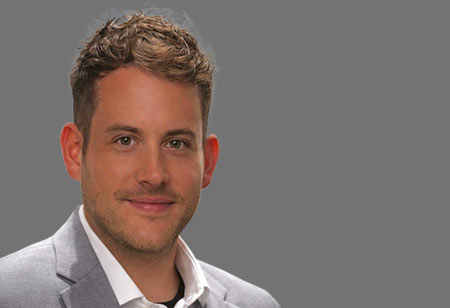
Matthew Shearer, Director of Environmental Health & Safety, Cash Construction Company
From Incident to Insight in Safety Leadership

Matthew Shearer
Experiences Shaping Leadership in Environmental Health and Safety
The experience that shaped me most as a leader happened on August 17, 2020, when our company lost a worker in a drum roller tip-over incident. Fatalities change everything, the way you see the work, your responsibility and what’s actually at stake when safety systems fail. I watched how that loss moved through our people and I made a decision that has guided how I lead ever since: we were not going to hide from it.
Some organizations treat fatalities as events to be managed legally, reputationally, quietly. We chose a different path. Every year on August 17th, we hold a company-wide stand down to honor our fallen worker’s life, reflect on what we learned and recommit to making sure it never happens again. John C. Maxwell defines leadership as one life influencing another. We carry that belief into August 17th every year, because her life still influences ours and always will. Our Infrastructure EHS VP, Michael Muffly, flew into Austin immediately after this happened and helped guide me through one of the hardest moments of my career.
That choice to lean in rather than away is where my leadership philosophy was forged. Jocko Willink’s Extreme Ownership taught me that when something goes wrong, the first question isn’t who failed, it’s what we miss and what we can learn.
Servant leadership is the thread that ties it together, removes obstacles, develops people and creates the conditions for your teams to go home safe.
Key Safety Challenges in Construction and Infrastructure
The gap between what a safety program says and what actually happens on the ground. The failure point is the translation from policy to field behavior and that happens at the supervisor level, every single morning.
Schedule pressure is the silent competitor to safety, where it lives in every conversation about productivity. As EHS leaders, we own that tension. Our job is to design workflows and set expectations so that the safe path can also be the most efficient one. When we do that well, there is no shortcut worth taking.
Fatalities change everything, the way you see the work, your responsibility and what’s actually at stake when safety systems fail.
Workforce development is the challenge nobody talks about enough. Our industry is absorbing large numbers of workers with limited experience and building hazard recognition skills is one of the most important investments we make. Our VP Troy Gjerde has empowered our safety team with a world-class training facility and hired Freddie Cantu as our Training Manager, who has brought years of hands-on expertise on board. Starting with new hire orientation, creating the Cash Construction experience from day one that contributes to a safer workplace.
Building a Strong Safety Culture through Data and Innovation
Employee recognition and accountability are at the core of building a strong safety culture. In 2025, our team achieved zero recordable or lost time injuries along with the fewest overall incidents in company’s history. We reduced vehicle, equipment, line strike, property damages and environmental events simultaneously. Our supervisors conducted the most safety observation checks in company history. We crossed one million hours without a hand injury through our Hands Off Campaign, which empowers and rewards our people to bring forward safer ways to do their work.
None of that came from a policy. It came from our people stepping up and playing for each other getting, it done with excellence. We also implemented SmartTagIt, an AI-powered video and audio JSA platform that scores conversations and provides predictive analytics on pre-task planning quality, giving supervisors objective data on whether crews are genuinely engaging with hazard identification. Culture is built in the daily moments: when a supervisor stops work without hesitation, when a crew member calls out a hazard and gets thanked instead of ignored.
AI and data analytics are shifting EHS from lagging indicators, TRIR and incident rates toward systems that identify risk before something goes wrong. Predictive analytics and AI-assisted observation tools are giving EHS professionals a fundamentally different set of inputs. Comprehensive EHS leadership today is no longer just injury prevention.
Developing Leadership and Perspective in EHS
Learn to lead before you learn to inspect. Walk jobsites to build relationships, not just find violations. When you find a hazard, ask the crew what the fix should be, you’ll get better solutions and more buy-in than handing down a corrective action from above.
Read broadly. Extreme Ownership will change how you think about accountability. Maxwell will sharpen your understanding of influence. Then go back to the field and practice both.
Finally, celebrate your wins. Safety is hard, demanding work. The teams doing it well deserve to know it.
The articles from these contributors are based on their personal expertise and viewpoints, and do not necessarily reflect the opinions of their employers or affiliated organizations.
Unlocking Your Potential: 5 Keys to Advancing Your Career in Property Management
Leanne C. Reynolds, Director, Property Management, Colliers [NASDAQ: CIGI]
-450x308_V16N.jpg)
The Internet of Drones: Redefining Construction in the age of Intelligence
Paul Doherty, President and CEO, the digit group, Inc.

Building Successful Construction Projects With Clarity And Proactiveness
Victor Young, SVP - Development/Construction Management, Kairoi Residential
Keeping Projects on Track: Goals, Balance, Code, Technology, and Leadership
Daniel G. Murtagh, Vice President of Engineering, BXP
Building Strong Safety Cultures Across Complex Construction Projects
Curtis Corley, Director of Safety - South, AECOM Hunt
Building Projects through People, Planning and Culture
Ben McCafferty, Project Manager, Shook Construction
Operational Groundwork, Strategic Impact: A New Era of Real Estate Leadership
Kalinka Ivanova, RPA, CCIM, MBA, Vice President Real Estate Development, HOLT Group